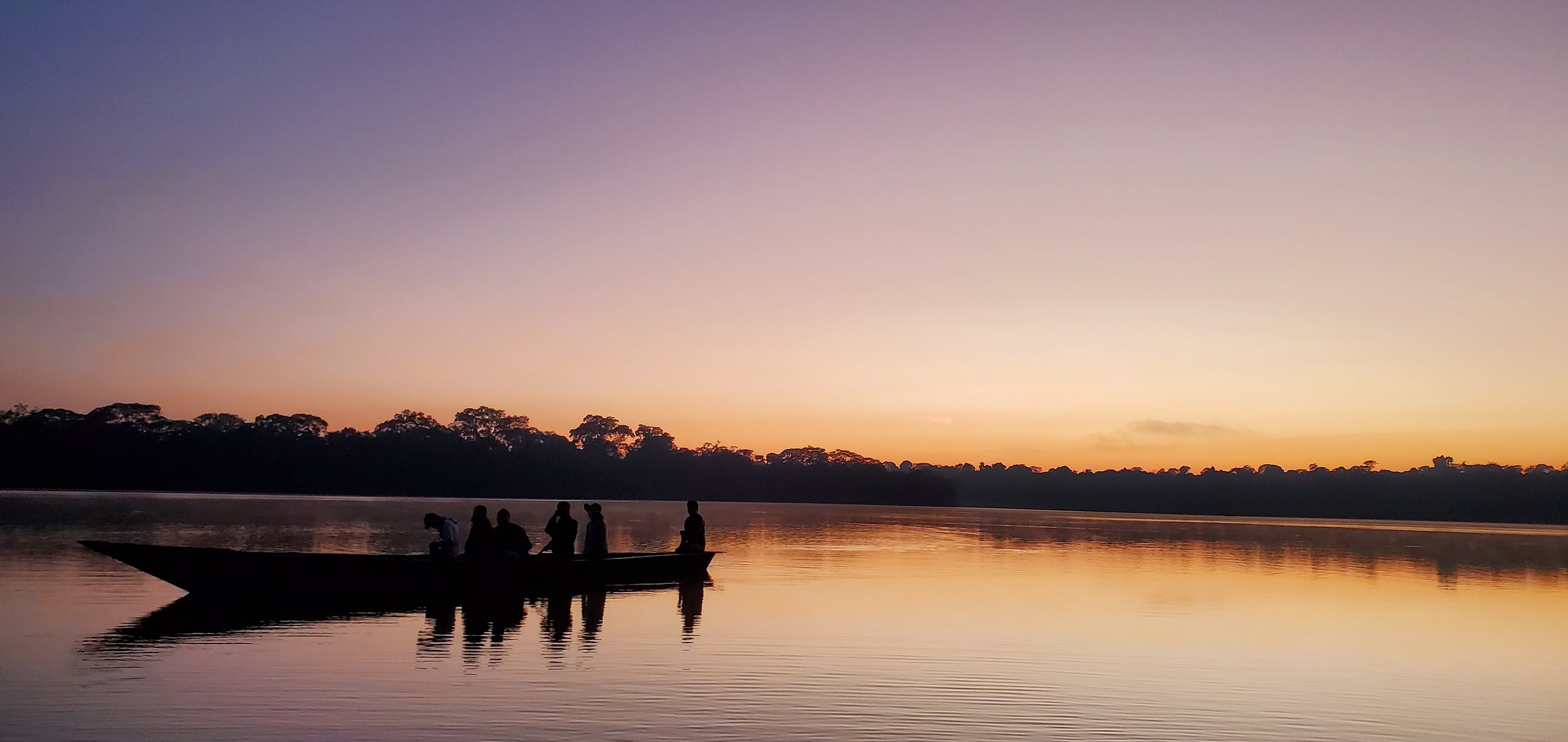
Study ecology where the jungle is the classroom
Three weeks in the Peruvian Andes and Amazon, combining tropical ecology, conservation, field research, cultural learning, and adventure.
Peru is the classroom.
Travel from the ancient Incan capital of Cusco through the high Andes mountains and verdant cloud forests into the lowland Amazon jungle, using each landscape as a living laboratory to study biodiversity, ecosystem processes, conservation, and human relationships with nature.
Students learn through field observations, guided excursions, discussions, readings, reflective writing, and engagement with researchers, conservation practitioners, local guides, and indigenous communities.
weeks
major ecosystems
unforgettable adventure
See the Andes-to-Amazon gradient.
From high mountain landscapes and Incan cities to lowland rainforests, the itinerary is organized around the diverse ecological and cultural landscapes of southern Peru.
 Amazon Rainforests
 Andean Landscapes
 Cultural Diversity
Temporary public-photo placeholders — replace these with your Flickr photographs before publication.
Field destinations
Manu BioLodge
Forest immersion and field-based tropical ecology.
Pantiacolla Lodge
Lowland Amazon rainforest, wildlife observation, and conservation.
Posada San Pedro
Montane environments and ecological transitions.
Wayqecha
Cloud-forest research and elevational biodiversity.
Parque de la Papa
Biocultural conservation, traditional agriculture, and Indigenous knowledge.
A three-week journey through living laboratories.
The final sequence will be confirmed with University of Miami Study Abroad and in-country partners. Weather, road conditions, and site access may require adjustments.
01 • Cusco & Sacred Valley
Orientation, acclimatization, cultural context, Sacsayhuamán, and Andean landscapes.
02 • Manu BioLodge
Introduction to tropical ecology and the wonders of the Amazon rainforest
03 • Pantiacolla Lodge
Lowland rainforest immersion, natural-history observations, and conservation biology.
04 • Posada San Pedro & Wayqecha
Cloud-forest ecology, birdlife, research-station perspectives, and elevational biodiversity.
05 • Parque de la Papa
Community-based learning focused on agrobiodiversity, Indigenous knowledge, and biocultural conservation.
06 • Salkantay Trek & Machu Picchu
Mountain ecology, landscape history, trekking, and reflection on tourism and conservation.
Academic experience
Core readings
Diversity and the Tropical Rain Forest by John Terborgh and Tropical Nature by Adrian Forsyth and Ken Miyata.
Field experiences
Transects, wildlife observation, ecological comparisons, guided natural-history activities, field journals, and discussions.
Learning outcomes
Analyze biodiversity patterns across habitats and elevations, evaluate environmental challenges, interpret field observations, and understand culture and conservation.
Adventure + academics
This is a fully immersive field course. Students should expect hard hiking, variable weather, rustic conditions, long travel days, and limited connectivity — alongside exceptional opportunities to experience tropical ecosystems firsthand.
Making the experience more accessible.
Dedicated support from the Aresty Endowment for Tropical Biology will be used to help lower student program costs and fees.
This funding is an important part of the recruitment and access strategy and is intended to make participation more attainable for University of Miami students.
Program support
Aresty Endowment for Tropical Biology
Funding will be applied toward reducing student costs, subject to final program budgeting and University of Miami procedures.
Final fees, dates, credits, eligibility, financial-aid information, and deadlines will be posted once approved.
Who should apply?
Biology & ecology
Students interested in tropical biology, biodiversity, evolution, conservation, field research, and ecology.
Outdoor adventurers
Students who love hiking, wildlife, natural history, exploration, and learning outside the classroom.
Curious across disciplines
Students from environmental science, sustainability, geography, anthropology, international studies, and related fields.
Ready to explore Peru?
Talk to your UM Study Abroad representatives and Dr. Feeley!